A Simple Way to Think About DOOH This Spring
Published: April 30, 2026
Spring is here, and while you’re cleaning out your closet, it might be time to clean up your media mix, too! Spring is a natural moment for marketers to refresh and reassess what’s working, what’s stale, and where there’s room to try something new.
It’s when strategies start to shift, budgets begin to open up, and campaigns need to reflect a very different kind of consumer energy than what we see in the colder months. What worked in January can feel stale by April.
That’s what makes this season such a valuable moment to step back, reassess, and look for new ways to show up. For many brands, that increasingly means looking beyond the usual digital channels and finding ways to connect with audiences out in the world.
If your brand is looking to bring a fresh start and to breathe new energy into your campaigns, digital out-of-home (DOOH) advertising can be a great place to start.
Why Spring Changes the Equation for Your Digital Media Mix
As the weather warms up, behavior changes quickly and in ways that matter for media strategy.
People are no longer confined to their homes and devices in the same way. They’re traveling more, spending time in retail environments, attending live events, and moving through shared public spaces.
In other words, attention shifts from personal screens to physical environments.
That gives advertisers more opportunities to reach audiences in context, not on just personal devices and competing for space in already crowded feeds.
At the same time, the broader out-of-home market continues to grow. OOH revenues recently reached record levels, with projections continuing upward through 2026. DOOH is a major driver of that growth, now accounting for a significant share of total OOH revenue and expanding at a steady double-digit pace. According to eMarketer, OOH revenues reached a record-breaking $9.5 billion dollars, with projections climbing to $11.28 billion dollars by the end of 2026.
DOOH, specifically, is a major growth driver, accounting for more than 36% of total revenues and showing 10.5% growth YoY. The takeaway isn’t just that DOOH is growing, it’s that it’s becoming a more consistent part of how modern media mixes come together.
What Is DOOH Advertising & Why Does DOOH Work Right Now?
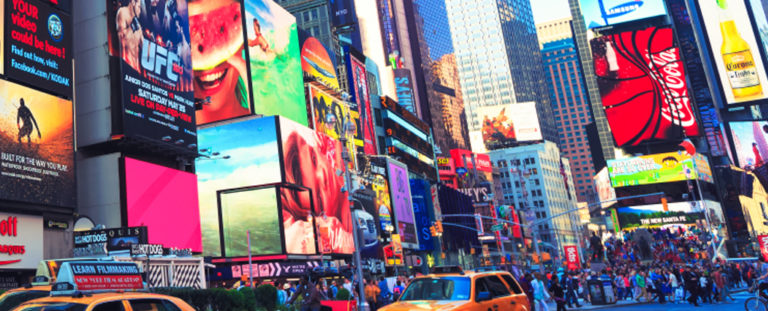
Digital out-of-home (DOOH) advertising refers to ads delivered across digital screens in real-world environments.
These can include:
- Billboards and roadside displays
- Transit hubs like airports and train stations
- Retail and shopping districts
- Gyms, office buildings, and entertainment venues
What sets DOOH apart from traditional out-of-home is its flexibility. Campaigns can be updated in near real time, adjusted by location, and aligned to specific audience behaviors or moments.
Instead of placing a static message and hoping it resonates, brands can respond to what’s actually happening, whether that’s a shift in weather, time of day, or local activity.
One of the reasons DOOH fits so naturally into a spring refresh is that it aligns with how people are already moving through the world.
By April, many consumers are:
- Planning or booking summer travel
- Refreshing wardrobes for warmer weather
- Attending sporting events and festivals
- Preparing for seasonal milestones like graduations and holidays
DOOH allows brands to show up closer to those decisions, whether that’s reaching travelers in airports, shoppers near retail locations, or fans near live events. It adds a layer of visibility that complements digital channels rather than competing with them.
How DOOH Fits Into a Modern Media Mix
For brands that already invest in channels like paid social, search, or connected TV, DOOH doesn’t replace those efforts, it extends them in a way that feels more connected to how people actually move through the world.
Most campaigns today are built for screens. They capture attention while someone is scrolling, streaming, or searching. DOOH adds something different. It shows up when people are out, active, and closer to real-world decisions.
It helps bridge the gap between:
- Online discovery and real-world action
- Digital engagement and physical presence
A campaign might start with awareness on social media or CTV, but DOOH reinforces that message in environments where people are already making decisions, shopping, traveling, or attending events.
That added layer can make campaigns feel more cohesive and harder to ignore. That reinforcement can make other channels work harder. Someone who sees a brand on a screen in the real world is more likely to recognize it later when it appears on their phone, searches for it, or encounters it again closer to a point of purchase.
DOOH also brings a different kind of presence to an omnichannel marketing strategy. Instead of competing for attention in crowded feeds, it exists in shared, high-visibility environments where attention is less fragmented and often more memorable.
It’s not just another touchpoint… it’s a way to connect digital campaigns to physical context, making the overall media mix feel more cohesive.
Where DOOH Works Especially Well in Spring
Spring doesn’t just bring people outside, it changes how and where they spend their time.
It’s a season defined by movement. People are more active, more social, and more likely to be making real-world decisions; whether that’s booking a trip, shopping for something new, or heading to an event.
That shift makes adding digital out-of-home advertising to your media mix especially valuable.
Here are some examples of the environments that DOOH is especially valuable for helping you reach:
Travel and transit:
As vacation planning turns into actual trips, airports, train stations, and rideshare routes become high-intent spaces. People aren’t just passing through… they’re thinking about where they’re going, what they need, and what comes next.
Retail and shopping districts:
Warmer weather brings more foot traffic, especially in walkable areas and outdoor centers. These are moments of active consideration, where people are already browsing, comparing, and making purchase decisions.
Fitness and wellness spaces:
Spring often comes with a renewed focus on health and routine. Gyms and studios see increased attendance, creating opportunities for brands that align with lifestyle, wellness, and personal goals.
Events and entertainment:
From March Madness to music festivals and early summer events, audiences are more engaged and present. These environments offer shared experiences where messaging can feel more relevant and timely.
What makes these environments powerful isn’t just visibility, it’s proximity to action.
Instead of reaching people while they’re scrolling, DOOH connects with them while they’re doing, making it easier for messaging to land at the right moment.
Digital-Out-of-Home: A Channel Built for Flexibility
Another advantage of DOOH is how adaptable it can be.
Campaigns can be:
- Launched quickly
- Adjusted by market
- Timed to specific moments
- Updated based on external factors like weather
Spring is one of the hardest seasons to plan for.
Weather shifts quickly. Events pop up across markets. Consumer behavior can change from one week to the next. What resonates on a rainy Monday might feel completely different by the weekend.
This complexity also makes it one of the most rewarding for brands that can adapt in the moment.
That’s where DOOH stands out.
More than just flexible, it’s responsive. Campaigns can be launched quickly, adjusted by location, and updated in near real time based on what’s actually happening; whether that’s a change in weather, time of day, or local activity.
That ability to respond turns unpredictability into an advantage.
A great example comes from Tu at Sainsbury, which ran a nationwide DOOH campaign that adapted its creative based on real-time weather conditions. Messaging shifted depending on whether it was sunny, rainy, or windy, allowing the brand to highlight products that felt relevant in the moment.
What made the campaign effective wasn’t just the creativity.
It was the timing. Instead of relying on a single seasonal message, the brand stayed aligned with how people were actually experiencing the day.
For marketers, that kind of responsiveness opens the door to a different way of thinking about campaigns. Rather than setting a message and letting it run, DOOH allows brands to evolve alongside the conditions around them.
In a season like spring, that can make all the difference.
What This Looks Like in Practice
This kind of contextual strategy is what powers many DOOH campaigns today, but increasingly, campaigns like this don’t just stop at visibility… they need to connect back to real outcomes.
With AdOmni’s advanced measurement capabilities powered by partners like LiveRamp, brands can now understand how exposure across DOOH, connected TV, and mobile translates into actual behavior. That might mean seeing how someone who passed a billboard later engaged with an ad on their phone, visited a website, or completed a purchase.
Instead of relying on assumptions, marketers can begin to see how different parts of the media mix work together, and adjust campaigns in real time based on what’s actually driving results.
In that sense, DOOH is becoming more than just a way to build awareness. It’s becoming part of a more measurable, connected system where visibility and performance are no longer separate ideas.
This kind of contextual strategy and in-depth measurement is what powered a campaign with our client FanDuel. FanDuel was looking to connect with NBA fans and bettors across the country.
Their campaign activated programmatic DOOH screens in locations selected based on where audiences were most likely to engage and messaging was timed using dayparting to align with key moments throughout the day.
By adding DOOH to their media mix, they were able to connect with NBA fans across high-impact environments and drive a result that led to 73% lift in website and app visits, along with more than 40 million impressions.
What made the difference wasn’t just scale, it was alignment. The campaign showed up in places and at times that matched what people were already doing, reinforcing intent rather than interrupting it.
A Simple Way to Think About DOOH This Spring
For brands exploring DOOH for the first time, it helps to keep things simple… especially in a season where behavior is constantly shifting.
One helpful mental model for planning your media mix is to think in terms of movement, moment, and message.
Movement:
Where are people actually going right now? In the spring, that might mean airports, shopping districts, gyms, or event spaces: places where routines start to change and foot traffic picks up.
Moment:
What are they doing when they’re there? Are they traveling, browsing, commuting, or attending something? These are often moments tied to action, where attention is more focused and decisions are closer.
Message:
What would feel useful or relevant in that situation? The most effective DOOH campaigns don’t just target an audience, they reflect what that audience is experiencing in real time.
When those three elements line up, DOOH starts to feel less like an ad and more like part of the environment… something that fits naturally into the moment rather than interrupting it.
In practice, bringing this kind of alignment to life is easier than it sounds. Platforms like AdOmni make it possible to plan, activate, and adjust DOOH campaigns across a wide range of environments, helping brands connect movement, moment, and message in real time. For marketers looking to explore what that looks like in action, it’s a useful place to start.
Explore our Self-Service and Managed Service DOOH Options
How DOOH Comes to Life Across Industries
The idea of movement, moment, and message can look a little different depending on the brand, but the core principle stays the same.
Here’s how it might play out across a few common use cases:
Travel and hospitality:
- Movement: Airports, transit hubs, rideshare routes
- Moment: Waiting to board, arriving in a new city, planning what’s next
- Message: Destination inspiration, last-minute upgrades, nearby experiences
In these environments, audiences are already thinking about where they’re going and what they’ll do when they get there, making messaging feel timely rather than intrusive.
Retail and e-commerce:
- Movement: Shopping districts, malls, high-traffic urban areas
- Moment: Browsing, comparing, deciding what to buy
- Message: Seasonal collections, promotions, new arrivals
Spring, in particular, brings a natural wave of wardrobe refreshes and outdoor shopping, making these placements especially relevant.
Sports betting and entertainment:
- Movement: Bars, arenas, transit routes near venues
- Moment: Pre-game anticipation, live events, post-game engagement
- Message: Real-time odds, promotions, app downloads
In these cases, timing is everything. Showing up just before or during a game can make messaging feel directly connected to what fans are already experiencing.
QSR and retail dining:
- Movement: Commuter routes, shopping areas, urban centers
- Moment: Deciding where to eat, looking for convenience
- Message: Limited-time offers, seasonal menu items, nearby locations
As foot traffic increases in the spring, these moments become more frequent and more valuable.
CPG and lifestyle brands:
- Movement: Gyms, wellness spaces, grocery environments
- Moment: Routine resets, health-focused decisions, everyday purchases
- Message: Product benefits, brand awareness, lifestyle alignment
Spring often brings a renewed focus on habits and routines, creating natural entry points for brands tied to health, wellness, and daily living.
Across each of these examples, the environments may change but the approach doesn’t.
It’s always about aligning where people are, what they’re doing, and what will resonate in that moment.
Stepping Outside
Spring has always been about momentum; getting back out, trying new things, and breaking out of routines.
The same idea applies to media strategy.
The brands that stand out this season won’t just refresh their creative. They’ll rethink where and how they show up, moving beyond crowded digital channels and into the real-world environments where decisions actually happen.
That’s where DOOH is making the difference. It gives brands the ability to show up in the right places, at the right moments, with messaging that reflects what people are doing in real time.
And today, acting on that opportunity is more straightforward than ever.
With AdOmni, you can plan, launch, and measure DOOH campaigns across premium screens in minutes, bringing movement, moment, and message together in a way that’s both scalable and measurable.
Get Started Now with No Minimum Spend
If you’re ready to refresh your media mix this spring, now is the time to put DOOH to work.
Written By: Julia Cramer
To get the latest updates on out of home advertising, digital marketing and technology, follow us on:


Or sign up for our newsletter.